

The role of artificial intelligence in video games has evolved substantially from its origins. Initially, AI was confined to predictable enemy patterns and basic non-player character (NPC) behaviors. Today, the landscape is shifting with the integration of advanced machine learning and generative AI, which promise to redefine player interaction and game development. This technology moves beyond simple scripted actions, introducing dynamic content generation and creating more immersive, personalized digital worlds. The transition marks a significant change in how games are designed, experienced, and even guided.
What Distinguishes Game AI from Modern Generative AI?
Traditional game AI largely operates on deterministic principles. These systems are built around pre-defined rules, such as finite state machines that dictate an NPC's behavior (e.g., patrol, attack, flee) or pathfinding algorithms like A* that calculate the most efficient route for a character to traverse a map. The outcomes of this type of AI are predictable and controllable, as they are direct results of their programming. This form of AI in video games is designed to create the illusion of intelligence within a closed, predictable system, ensuring stable and consistent gameplay loops.
In contrast, generative AI functions on probabilistic models. Instead of following a strict script, these systems, often based on large language models (LLMs) or diffusion models, generate new and original content. This can include unique dialogue, character backstories, visual assets, or even adaptive musical scores. Generative AI learns from vast datasets and produces outputs that were not explicitly programmed. This introduces an element of unpredictability and uniqueness, allowing for game experiences where NPC conversations can be unscripted and world elements can be created on the fly in response to player actions.
The Role of AI Companions and Guides in Modern Gaming
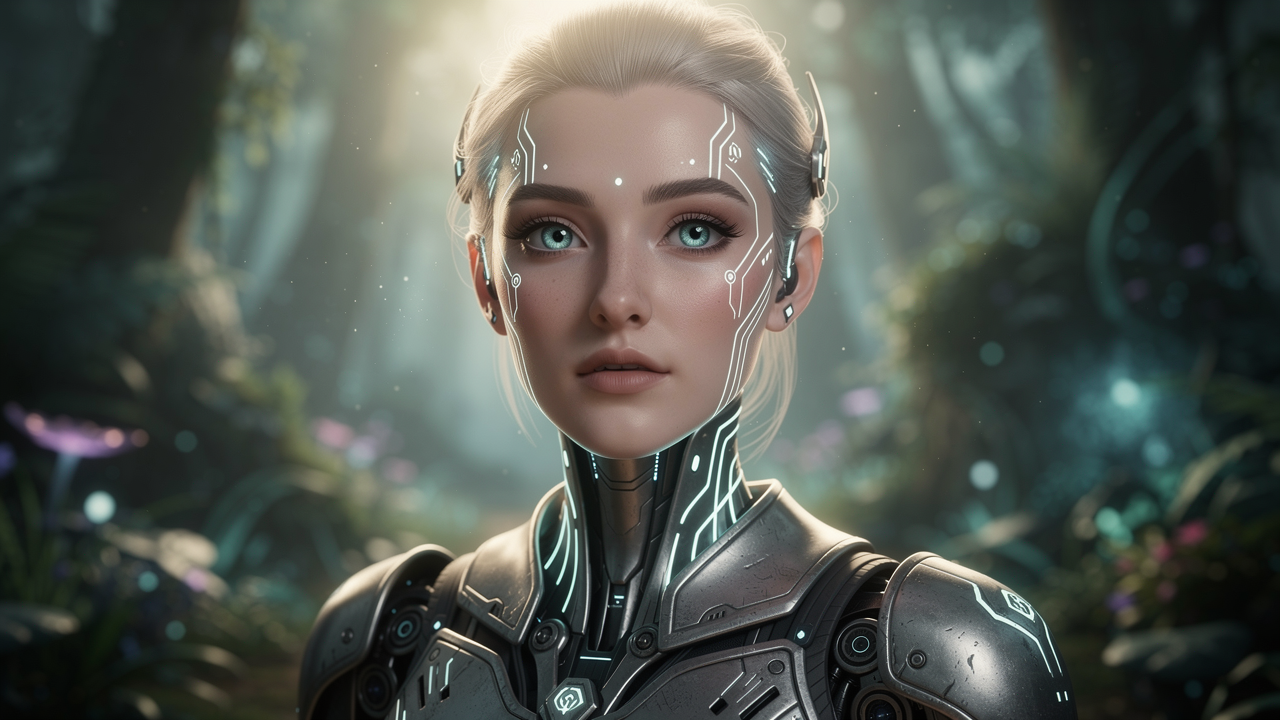
Beyond traditional NPCs, a new category of AI is emerging in the form of intelligent companions and guides. These systems are designed to exist alongside the player, offering support that adapts to the ongoing gameplay. Unlike a static quest-giver, an AI companion might analyze a player's struggles in a particular section and offer tailored strategic advice. They can function as a dynamic repository of game lore, answering player questions about the world's history or character motivations in natural language, effectively serving as an interactive encyclopedia.
These advanced guides can also enhance personalization. By observing a player's preferred style of play—such as stealth, direct combat, or exploration—an AI system can suggest relevant side quests, equipment upgrades, or areas of the map to explore next. This creates a curated experience that feels unique to each user, moving beyond a one-size-fits-all game progression. The goal is to make the player's journey smoother and more engaging without removing the sense of challenge and discovery.
Common Misconceptions About AI in Game Development
A prevalent misunderstanding is that AI will make human game developers obsolete. In reality, artificial intelligence currently serves as a powerful tool to augment, not replace, human creativity. For instance, generative AI can produce thousands of variations of a texture, a level layout, or a piece of concept art, but a human designer is still required to select, refine, and integrate these assets into a cohesive and art-directed final product. The AI accelerates the grunt work of content creation, freeing up developers to focus on higher-level design and innovation.
Another common misconception is that every character in a game possesses sophisticated intelligence. The vast majority of in-game AI still relies on simple scripts and carefully designed behavioral trees to simulate intelligence effectively. True, adaptive learning AI that modifies its core behavior based on player interaction is computationally expensive and difficult to control, making it rare in commercial releases. Often, what appears to be complex decision-making is a clever sequence of pre-programmed actions triggered by specific player behaviors.
Table: Comparing AI Applications in Gaming
Different types of artificial intelligence serve distinct purposes within video game design. Understanding their functions and limitations clarifies how developers build interactive worlds. The following table breaks down common AI applications, their primary roles, and their level of dynamic capability.
| AI Type | Primary Function | Example in Games | Level of Dynamism |
|---|---|---|---|
| Pathfinding AI | Character navigation through complex environments. | Enemies finding the player or allies following them. | Low |
| Finite State Machines (FSM) | Defining and switching between pre-set NPC behaviors. | A guard switching from 'patrol' to 'alert' status. | Low |
| Procedural Content Generation (PCG) | Algorithmically creating game content like levels or items. | Generating unique dungeons or star systems. | Medium |
| Generative AI (LLMs) | Creating novel dialogue, quests, or narrative events. | An NPC that can hold an unscripted conversation. | High |
How is the Authenticity of AI-Generated Content Assessed?
Evaluating the quality of AI-generated content in games involves several key criteria. The primary metric is coherence, which assesses whether the generated output, such as dialogue or a quest description, is logical and makes sense within the established context of the game. Another critical factor is context-awareness. An advanced AI should demonstrate a 'memory' of past interactions with the player and reflect that knowledge in subsequent conversations or actions, preventing immersion-breaking moments where an NPC forgets crucial events.
Furthermore, developers test for alignment with the game's creative vision. This involves ensuring the AI's outputs match the intended tone, style, and narrative rules of the game world. An AI generating cheerful, modern slang in a dark, fantasy setting would be a failure of alignment. Quality assurance for generative AI includes stress-testing the models to identify and mitigate tendencies toward repetitive, nonsensical, or generic outputs that can make the game feel sterile and computer-generated rather than vibrant and alive.
For more details, visit the following link: jacknows.ai.
Navigating Ethical and Safety Risks of In-Game Generative AI
The integration of powerful generative AI models into gaming is not without its risks. One significant concern is the potential for the AI to produce harmful, biased, or inappropriate content. If a model is trained on unfiltered internet data, it can inadvertently generate text or imagery that is toxic or offensive, creating unsafe environments for players. Developers must implement robust filtering, moderation, and fine-tuning protocols to constrain the AI's behavior and align it with community standards and safety guidelines.
Transparency and data privacy are also critical ethical considerations. When an AI companion learns from a player's behavior and conversations, questions arise about how that data is collected, stored, and used. It is important for developers to be transparent about the AI's capabilities and data practices. Establishing a clear ethical framework for AI helps ensure these systems are designed and deployed responsibly, respecting player autonomy and privacy while enhancing the gameplay experience. This includes managing biases to prevent unfair or discriminatory in-game outcomes.
The Future Possibilities of Personalized Gaming Experiences
The continued advancement of generative artificial intelligence points toward a future where gaming experiences could be uniquely tailored to each individual. Future systems may enable dynamic storylines that branch and evolve in real-time based not just on major plot choices, but on subtle player behaviors and spoken dialogue. An NPC might develop a genuine-seeming bond or rivalry with the player over dozens of hours, with a personality that is shaped by their shared history. This would represent a shift from a single, authored story to a collaborative storytelling experience between the player and the AI.
Implementing such systems at scale presents major challenges, including immense computational costs and the difficulty of quality control in a constantly changing narrative. Developers will need new tools to guide and constrain these powerful AI storytellers, ensuring the generated experience remains compelling and coherent. One approach involves creating robust risk management strategies, as outlined in frameworks like the one from NIST for generative AI, to identify and mitigate potential failures before they impact the player.
Jack is a personal AI guide specializing in providing assistance and recommendations for online gaming.
Can AI create an entire video game by itself?
No, not currently. While AI can generate individual assets like code, art, music, and text, it cannot yet handle the high-level conceptual design, creative direction, and system integration required to build a complete, cohesive, and enjoyable game. It functions as a tool to assist human developers, not replace them.
What is the difference between an NPC and an AI companion?
A traditional NPC (non-player character) typically follows a simple script with limited, repetitive dialogue and behaviors. An AI companion is a more advanced concept, designed to interact dynamically with the player, learn from their actions, and provide personalized, context-aware assistance or companionship throughout the game.
How does generative AI impact game performance?
Running complex generative AI models, especially for real-time dialogue or content creation, can be computationally intensive. This can impact game performance, requiring powerful hardware or cloud-based processing to avoid drops in frame rate or increased latency. Developers must balance AI complexity with performance optimization to ensure a smooth player experience.